
Caramel Brioche Rolls with Vanilla Glaze
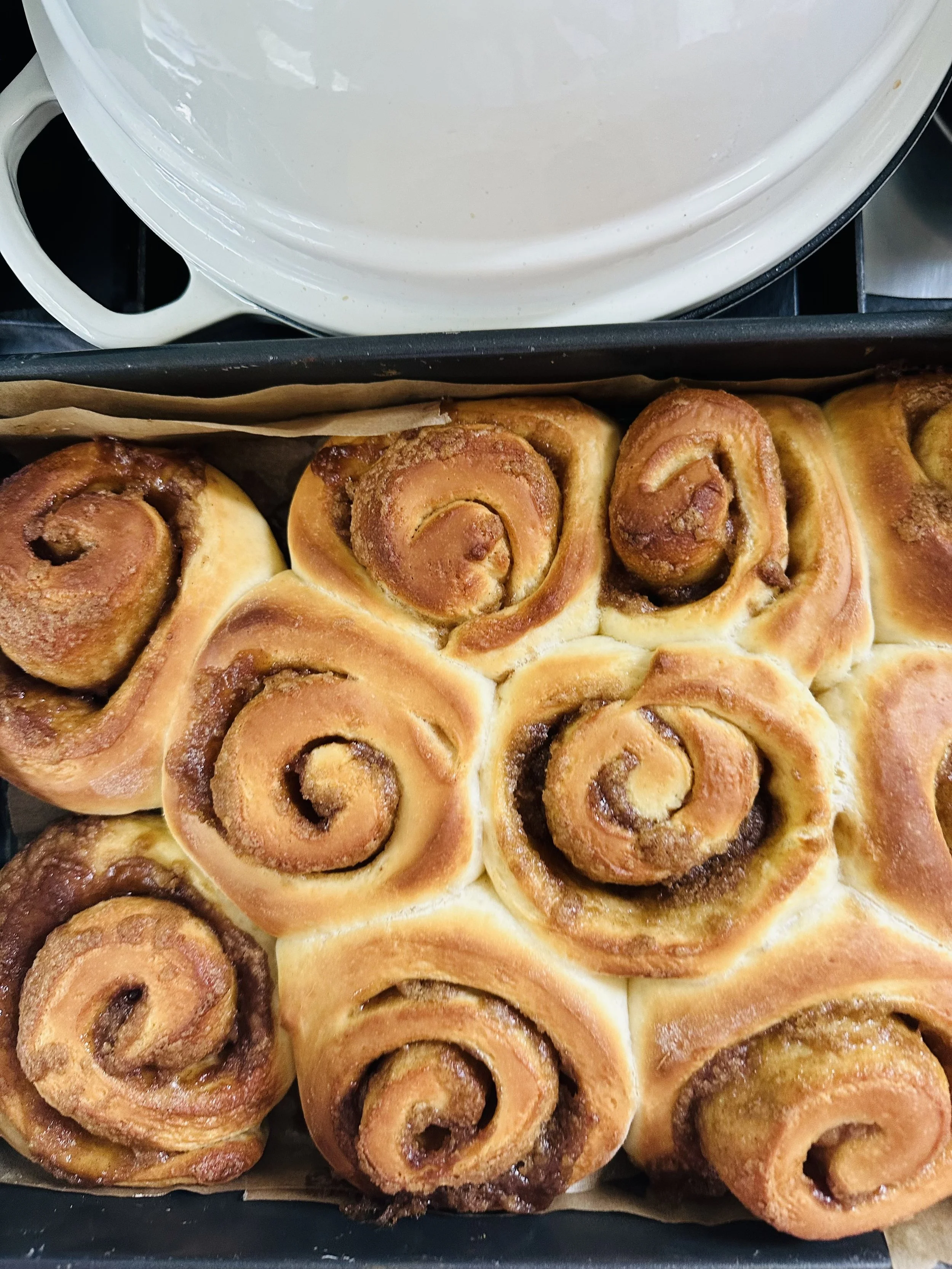
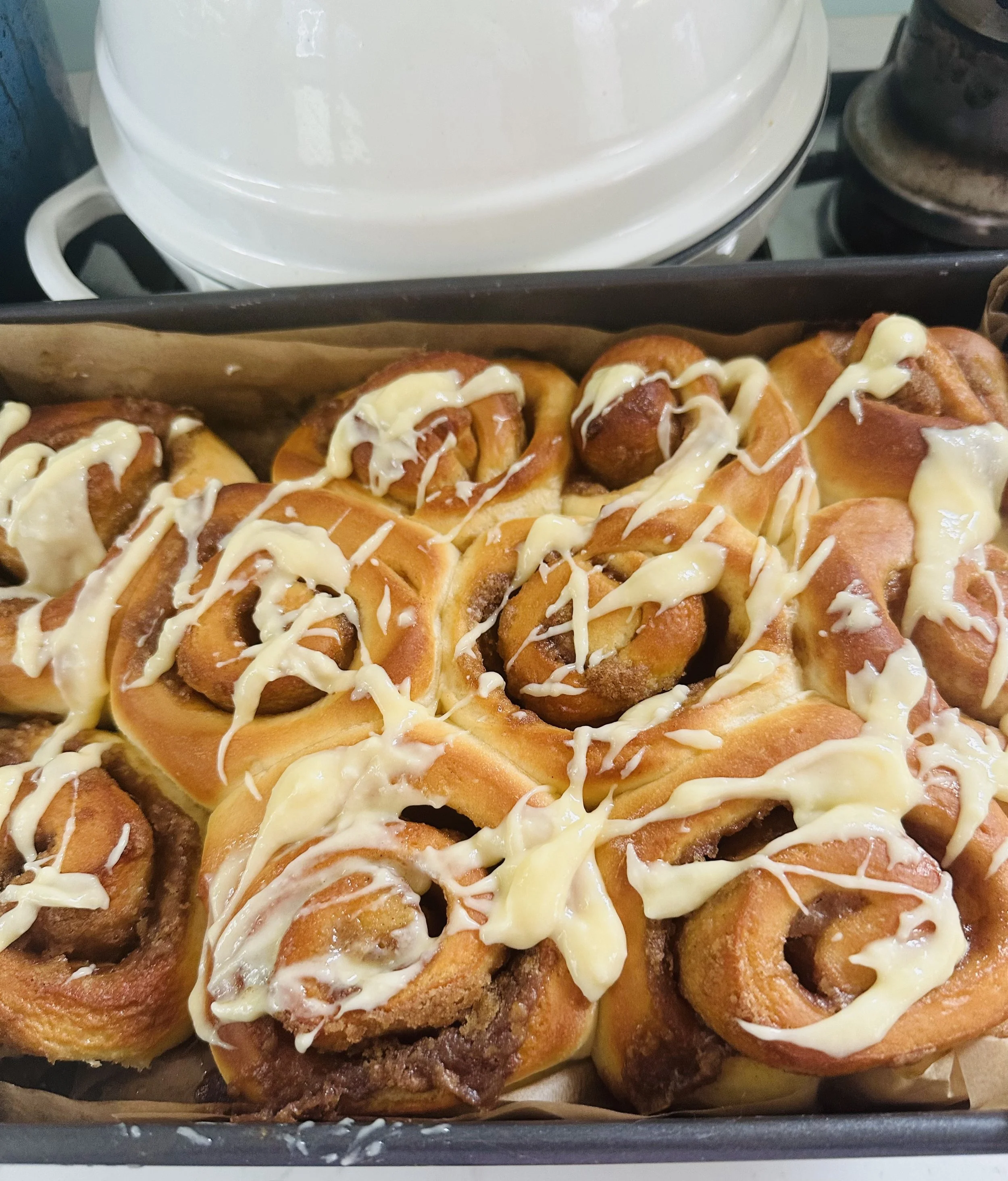
I love cinnamon scrolls. I love the soft dough, the sticky caramel cinnamon filling and a nice bit of icing on top.
So I have been experimenting with recipes, different versions, all fairly similar. I even tried a sourdough version, but that was tricky as its hard to rise an enriched dough with a sourdough starter.
Finally after much baking - and eating - I have come to the conclusion that what I want is a brioche style dough rolled with a sticky caramel cinnamon filling and a vanilla glaze on top.
This recipe has a brioche style dough, not a full brioche but near enough. And the filling is very caramelly with just a touch of cinnamon because I love lots of caramel! And it’s more of a roll than a scroll. Finished with a light vanilla cream icing/glaze.
Here’s the recipe.
Dough
275ml full-fat milk (room temperature)
2 free-range eggs (room temperature)
10g instant yeast
255g plain flour
255g strong flour
50g caster sugar
10g salt
80g unsalted butter in small pieces (softened)
Caramel Filling
75g butter, melted
180g light brown sugar
30g plain flour
1.5 teaspoons cinnamon
1/4 teaspoon sea salt
Vanilla glaze
20g butter
120g icing sugar
30mls pouring cream
1 teaspoon vanilla extract
Mix the milk and egg and whisk in the yeast in a jug or bowl. In an electric mixer, combine the flour, sugar and salt. Scatter the butter pieces through the dough. Add the milk, eggs and yeast. Turn the mixer to low and mix to combine the ingredients.
Continue to mix on low until everything is incorporated. Increase the speed to medium and mix for about 10 minutes. After this time, check to see if the dough windowpanes. The dough should be lovely and stretchy and pass the windowpane test if you pull and stretch a small section – it should be translucent.
Cover the bowl with cling wrap or a plastic shower cap and leave to prove for 1-2 hours until doubled in size. Press the dough down, and then place the bowl in the fridge for 6 hours or better still overnight.
The dough will develop some more plus firm up to help with the next stage of shaping.
Remove the dough from the fridge and turn it onto a lightly floured surface. Flour a rolling pin and roll the dough into a large rectangle, as large as you can go, with the dough ending up about 1/2 cm thick. My dough rectangle is usually about 30cm in width by 40-50cm in length.
To make the filling, put the melted butter is a small bowl and stir through the other ingredients to make a thick paste. Spread this paste all over the rolled dough, leaving a centimetre edge all round.
With the long edge of the dough facing you, roll the dough as tightly as you can get it. Using a sharp knife trim each end of the dough roll, cutting off a couple of centimetres. This is to neaten the dough. Cut the long dough roll into 10 slices. (Each roll is quite generous).
Place cut sides up in a large baking dish lined with baking paper. Cover with a large plastic bag and leave to prove in a warm place for 1-2 hours until the dough is noticeably risen and passes the proving test: gently poke it with your fingertip, when it’s properly proved the dough should feel soft but stable and slowly return to its former position.
While the dough is proving, preheat your oven to 200°C or 180°C fan.
When the dough has proved, take the baking dish from the plastic bag and place into the preheated oven. Bake for 20-25 minutes or until the rolls are risen and they are a deep golden brown.
Leave in the baking dish to cool completely. You are now ready for the glaze. Mix the ingredients together to make a slightly runny icing. Drizzle the glaze over the rolls.
The rolls are nice served at room temperature with the glaze more of an icing, or warmed slightly in the microwave with a slightly runny melted glaze!